
Change begins with the ability to imagine alternatives. “We cannot create what we can't imagine”.
Lucille Clifton
Origin Story
with Co-founders, Lindsay Edwards and Douglas Paulson
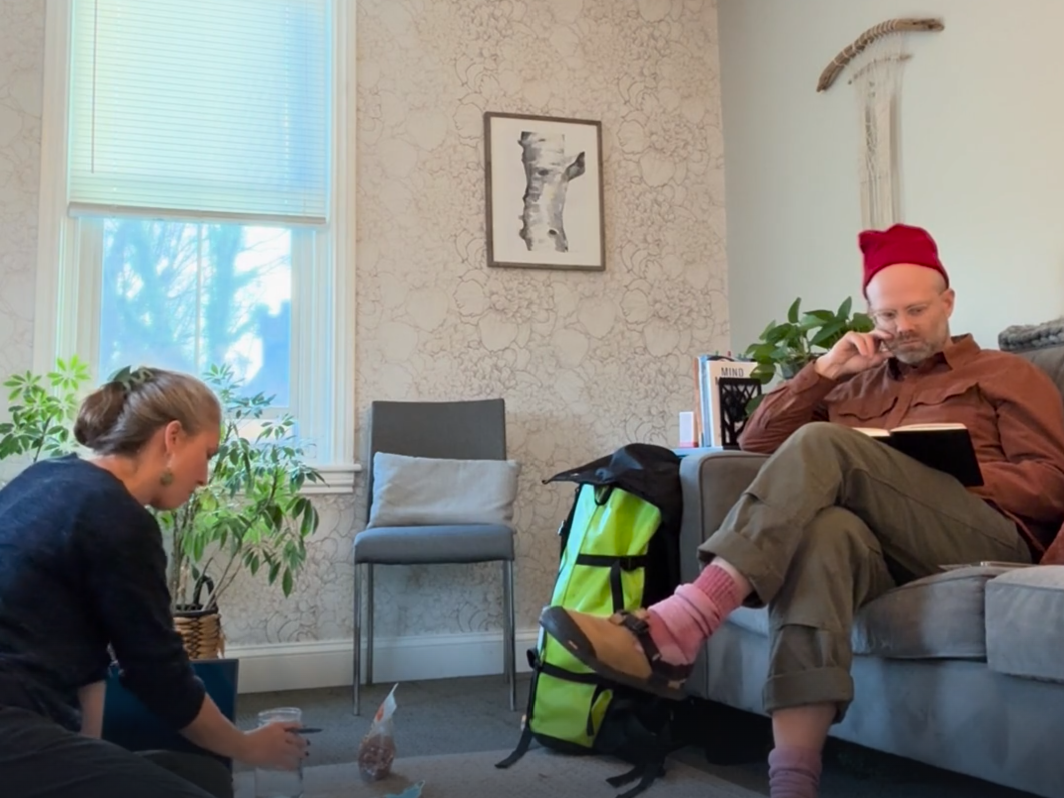
Lindsay and Doug at AiC notating the development of their “Art of Connecting” training intensive.
Arts in Counseling was co-founded in 2025 by Douglas Paulson, a Queens-based professional artist whose community work often functions as social care, and Lindsay Edwards, a Licensed Professional Counselor and Dance/Movement Therapist. They came together through a shared recognition that creativity is essential to health, connection, and meaningful change. Drawing on decades of nonprofit and community-based experience, we observed both the powerful ways artists build trust, invite vulnerability, and foster collective meaning—and the limits artists face when mental health needs or crises arise without clinical support. At the same time, we recognized how traditional mental health systems often fail to reach many people due to stigma, cost, cultural mismatch, or rigid models of care. From this tension emerged a different approach: not asking artists to become therapists, but pairing professional artists with licensed creative arts therapists. Our scaffolded model of care integrates clinical treatment with participatory, community-based creative practice, offering multiple entry points to support and allowing people to move fluidly between clinical and non-clinical care. By embedding artists and clinicians within a single ethical framework, Arts in Counseling expands the mental health ecosystem toward care that is relational, preventative, and community-centered—strengthening both individual wellbeing and the collective conditions that sustain it . . .
Testimonials
"I truly appreciate everything you did for me while I was struggling during pregnancy. Our sessions were a true milestone for me that helped pull me out of my little dark hole. My doula even said while I was in labor that the person she met when I was 20 weeks pregnant to the person I was at delivery were two different people."
— Former Perinatal Therapy Client“You sensed something in my body that signaled I didn’t want you there anymore—and you listened. You responded immediately with what I needed. I didn’t even know how to ask. You showed me that someone can respect my body, my voice. Someone can still care when I say ‘no,’ without punishing me for it.”
— Client’s testimony about a
dance/movement therapy session
"I continue to implement all the strategies/coping skills learned in therapy when those intrusive thoughts start creeping up. Definitely have learned what my triggers are and have started to make plans in anticipation of these thoughts coming up. You saved my life (seriously), and I always bring your name up to my friends that might need some additional support. I could not thank you enough!"
— Former Client with OCD and Anxiety “[Lindsay] reframes a lot of things that I say into some visionary picture so that I can conceptualize it in a digestible manner because my thoughts are overwhelming. I’ve done a lot of therapy over my life and I couldn’t remember what I talked about. But when I leave therapy with you, it turns into a curiosity discussion point for days. Infectious, in a good way. I left every therapy session with something. This was like real therapy.”
— Client's testimony upon terminating treatment due to meeting goals. Client sorted childhood trauma, anxiety, panic and addiction.“I feel like I’m at home with you during our therapy sessions.”
- Testimony from a client with a history of severe trauma
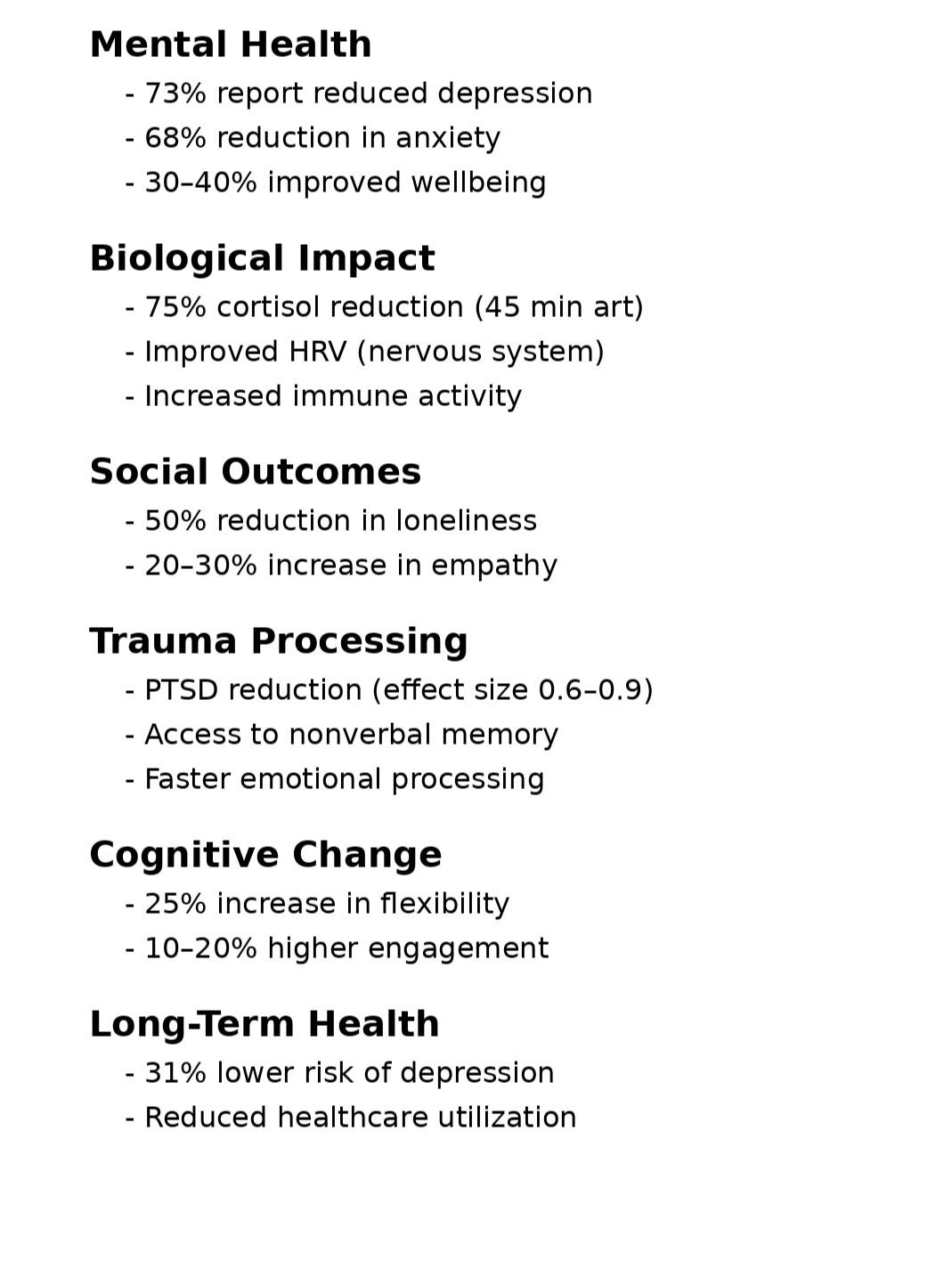
Creativity in Therapy: Measurable Outcomes
For a deeper dive into creative arts therapies, arts in health and the benefits of creativity, read more.