
Expanded Version:
Arts in Counseling was co-founded through conversations between us—Douglas Paulson, a Queens-based professional artist whose work often functions like social work within community settings, and Lindsay Edwards, a Licensed Professional Counselor and Dance/movement Therapist. After decades of leading work within nonprofit and community-based sectors, we found ourselves ready to build something new—drawing from our shared belief in creativity as a vital force for health, connection, and change.
We’ve seen how artists can help communities come together. Through relationship, trust, and shared creative experiences, some artists are able to connect deeply with communities and can uniquely engage large groups in collective action, expression, and meaning-making. Because creative spaces can invite vulnerability, reflection, and emotional openness, they often become places where trauma, grief, conflict, and mental health symptoms surface.
Being ill-equipped to effectively support mental health is a point that Doug shared in these conversations, as a commonality amongst artists. His work fostered stability, belonging, and care, and people often turned to him during their most vulnerable moments—yet he didn’t hold, nor necessarily want, the credentials required to treat mental health conditions safely and ethically. Thankfully, creative practice naturally regulates the nervous system, integrates mind and body, and allows meaning to emerge without needing to be spoken first. We often think best while moving, or while drawing, or tending a garden, or while getting lost in a rhythm. But this has not been enough to rely on when mental health crises emerge or further treatment is an evident need during community art-making.
Lindsay then identified that traditional mental health systems often fail to reach many people—particularly those who are underserved, culturally diverse, skeptical of clinical labels, or unable to access care due to cost, stigma, or rigid service models.
This led us to ask a different question: what if artists weren’t asked to become therapists, but instead partnered with licensed clinicians who deeply understand, value, and already utilize the creative process in their practice—creative arts therapists?
From that question, our scaffolded model of care emerged. In Arts in Counseling, licensed creative arts therapists provide individual, family, and group mental health treatment, while professional artists lead participatory, relational work that supports community-wide and collective wellbeing. Together, we offer multiple entry points to care—reducing stigma, increasing access, and allowing people to move fluidly between clinical and non-clinical support as their needs evolve.
Arts in Counseling exists to expand the mental health ecosystem itself. By integrating artists and licensed creative arts psychotherapists within a single, ethical framework, we shift care from a solely individual, diagnosis-driven model toward one that is relational, preventative, and community-embedded. Our work reframes mental health as something practiced—through movement, creation, relationship, and shared meaning—strengthening not only individuals and families, but the collective conditions that support long-term wellbeing.
Origin Story
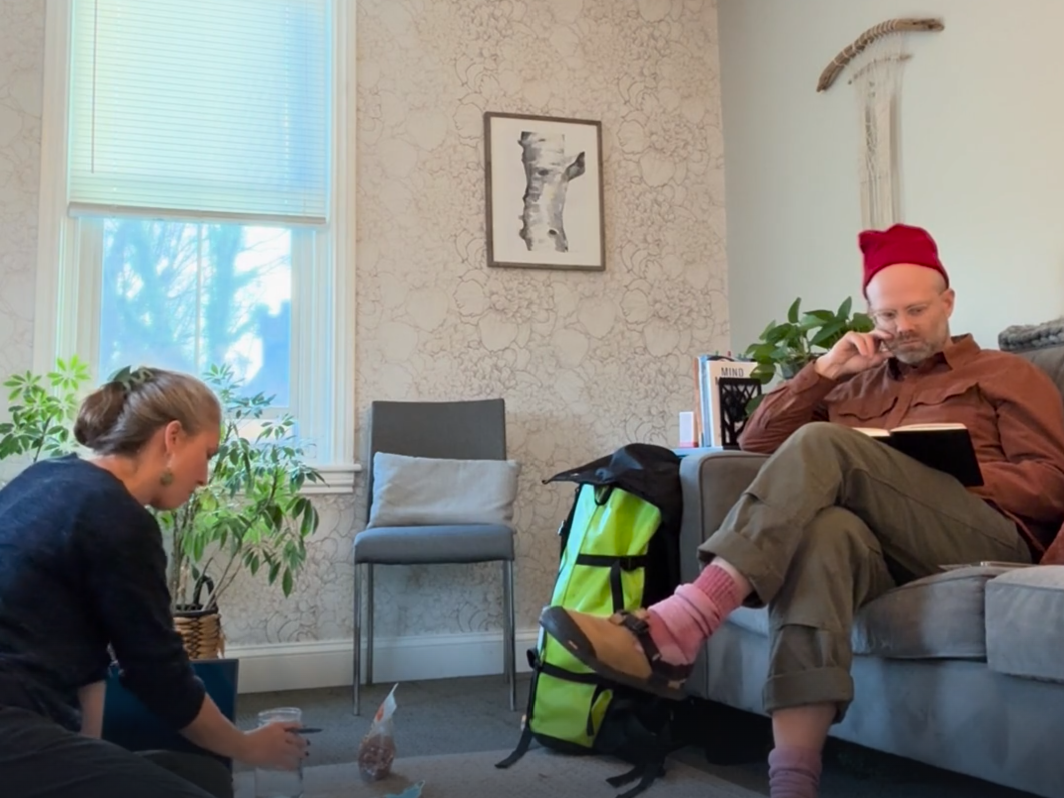
Co-founders, Lindsay Edwards and Douglas Paulson